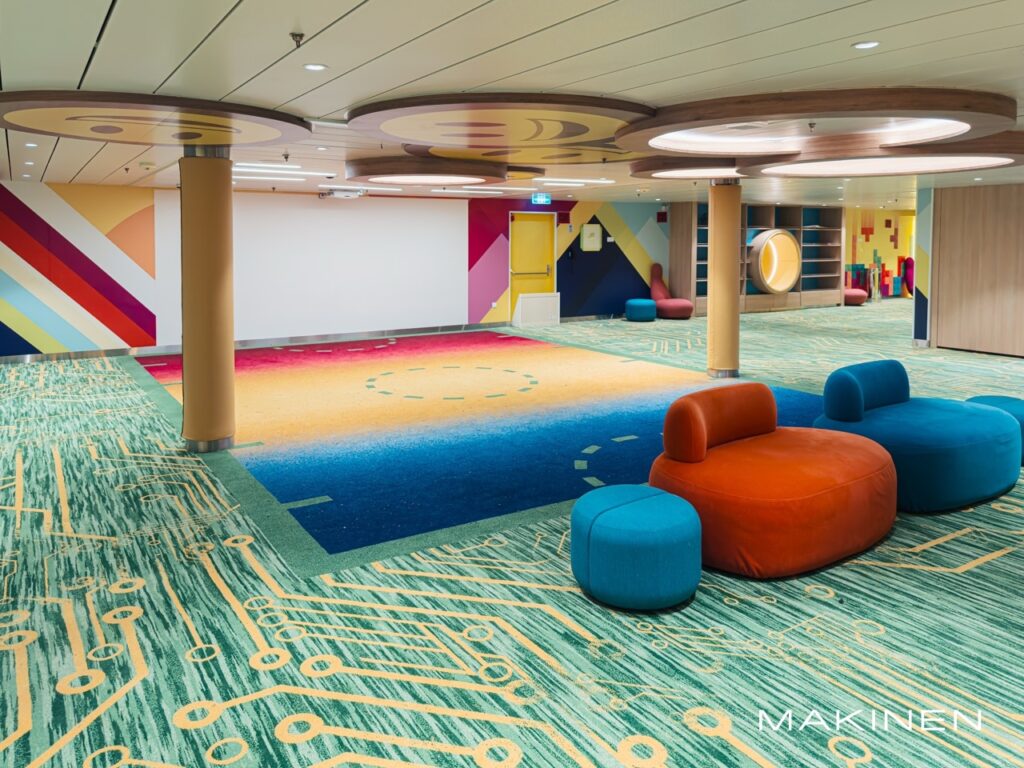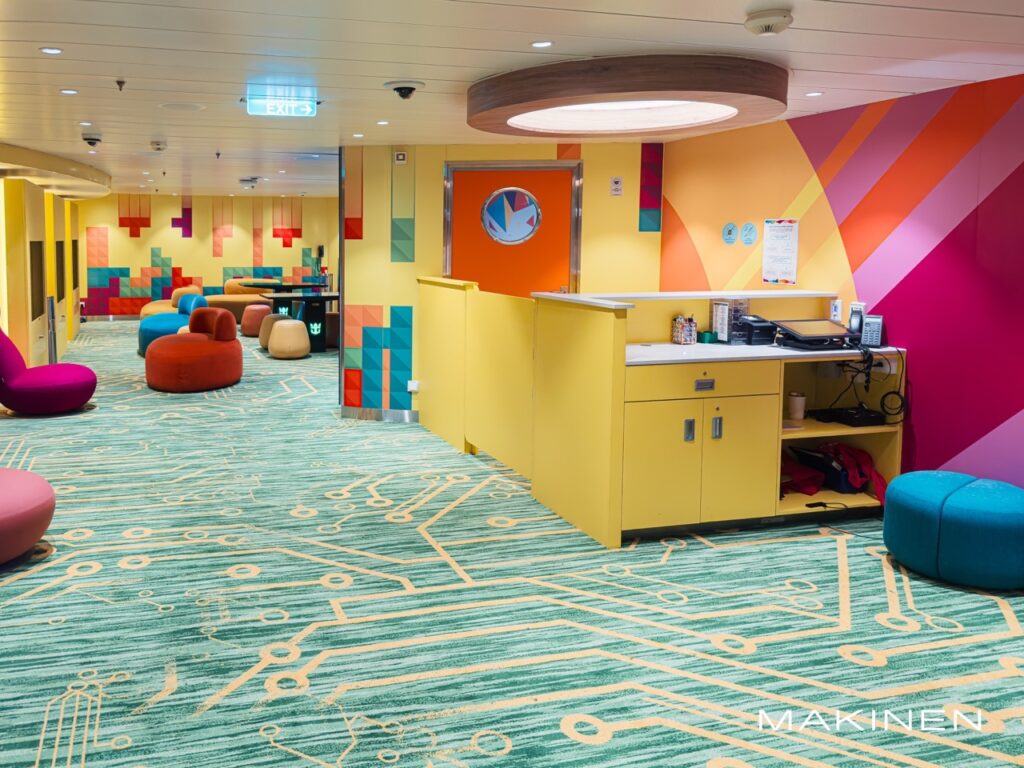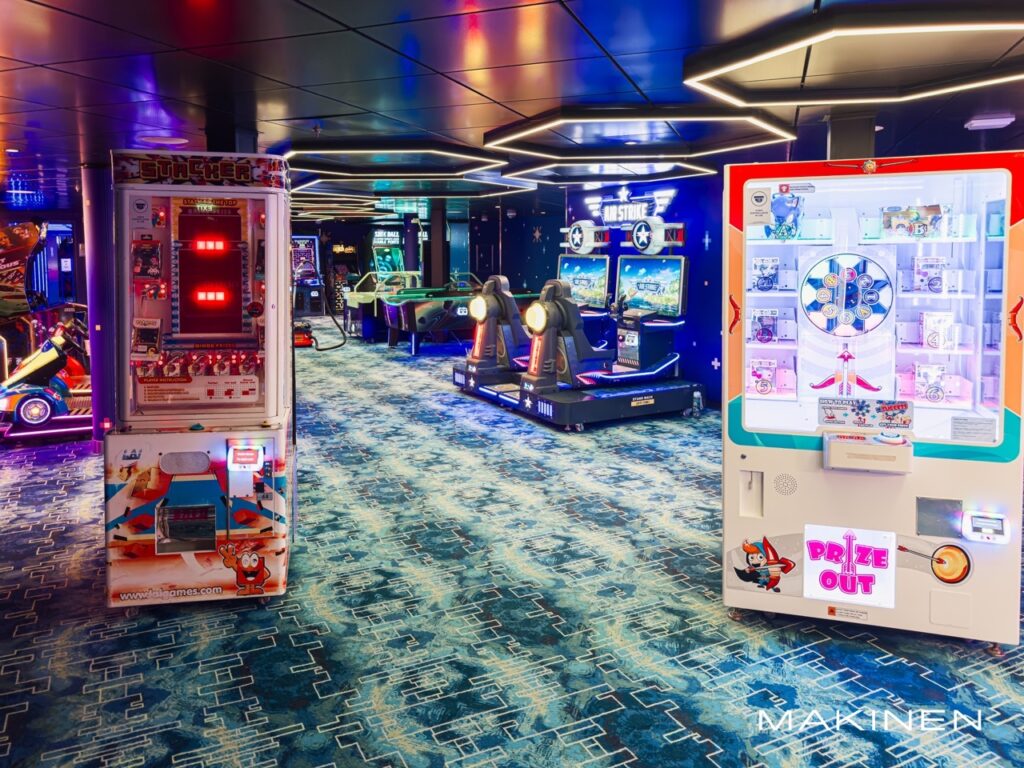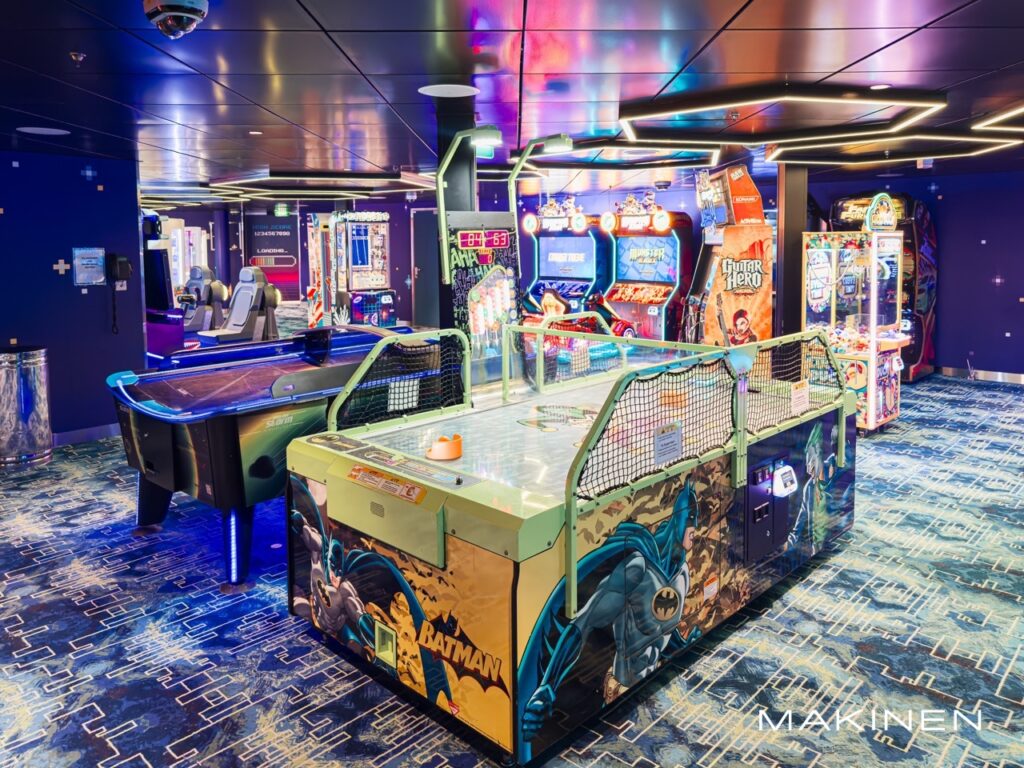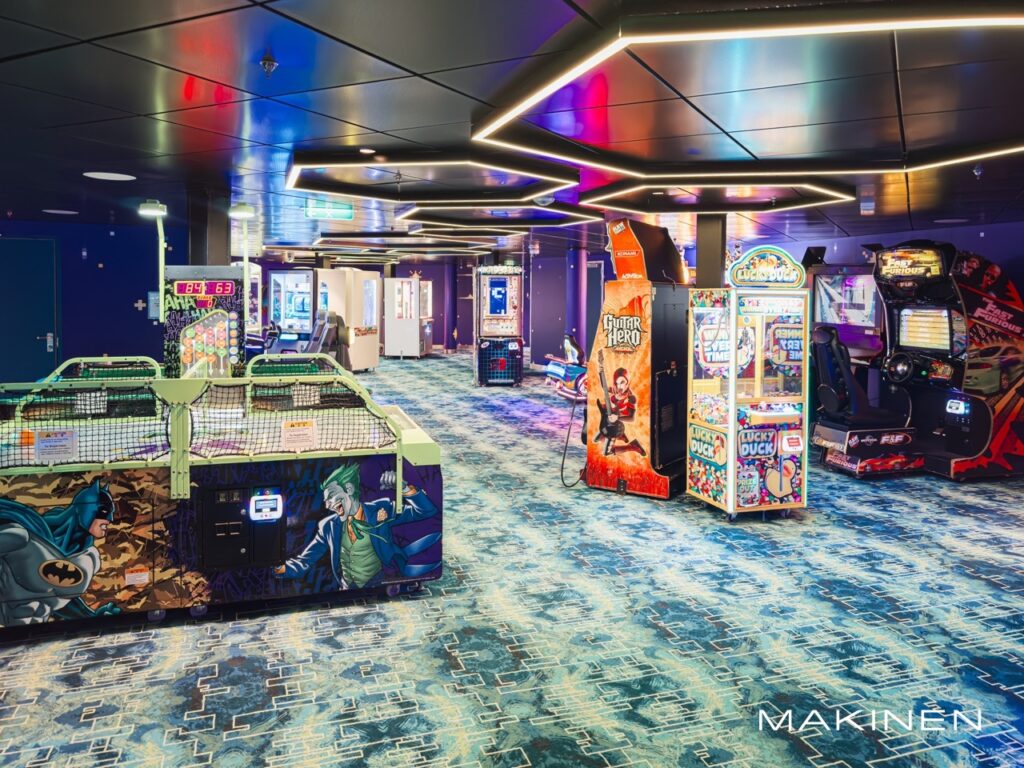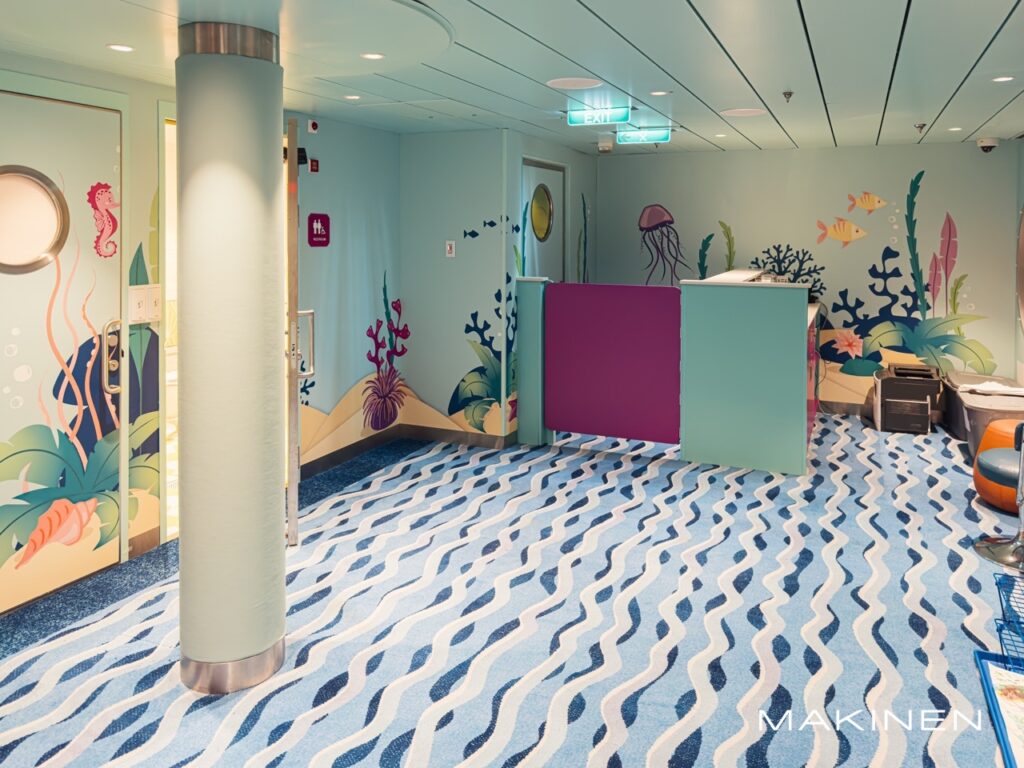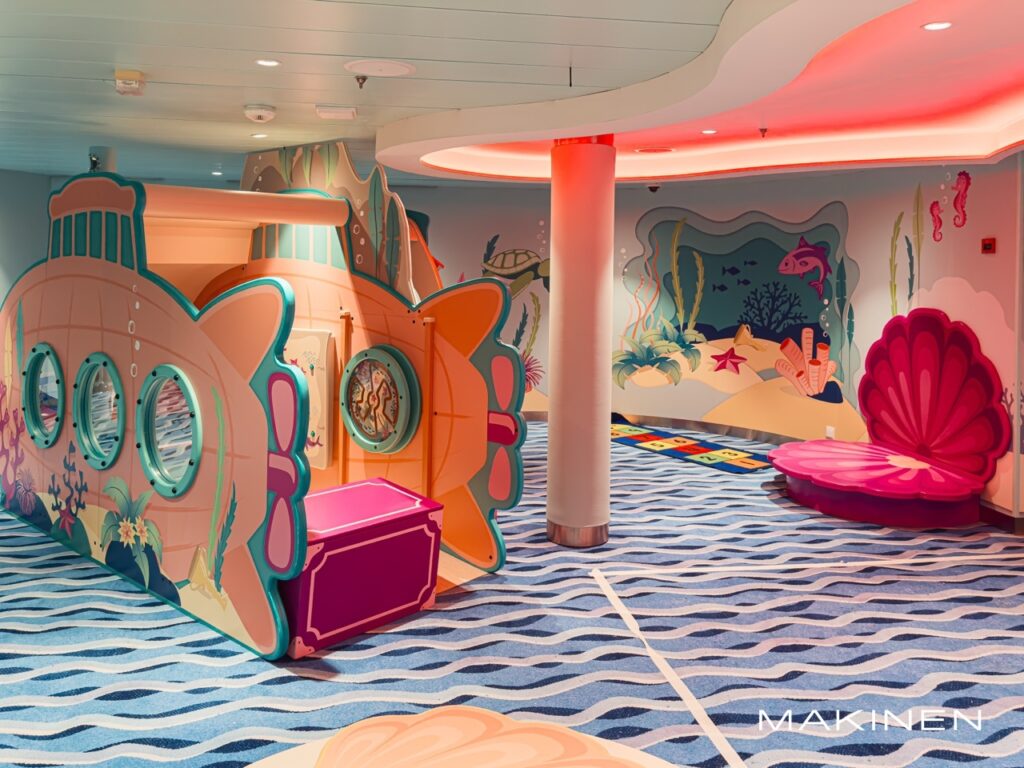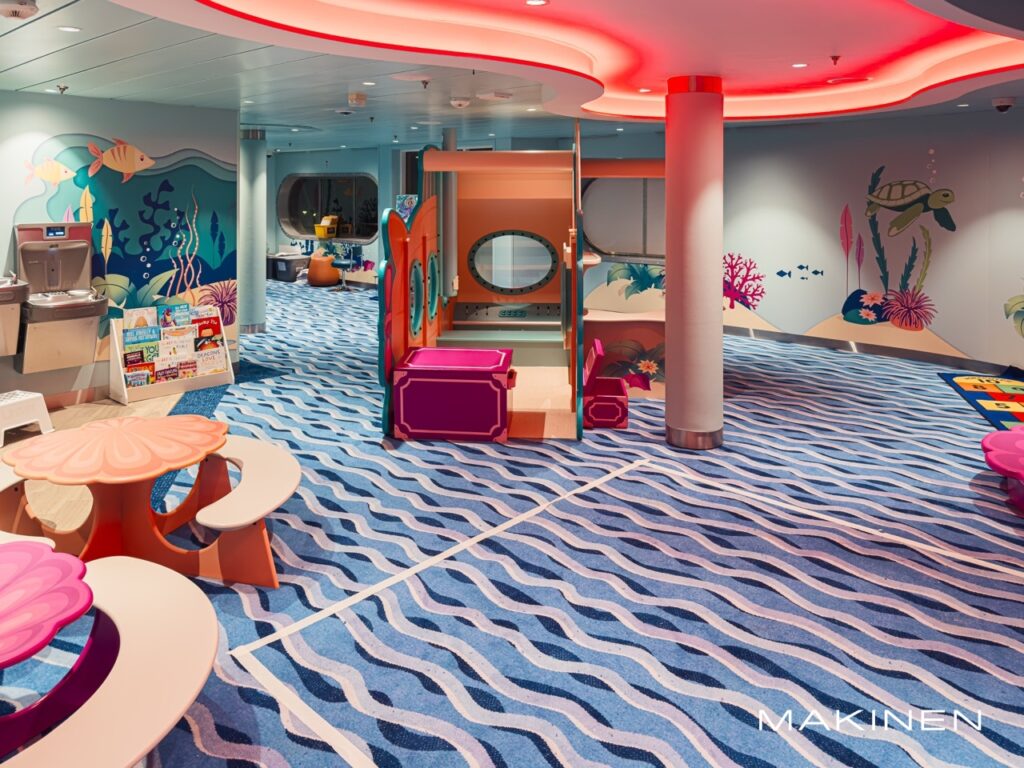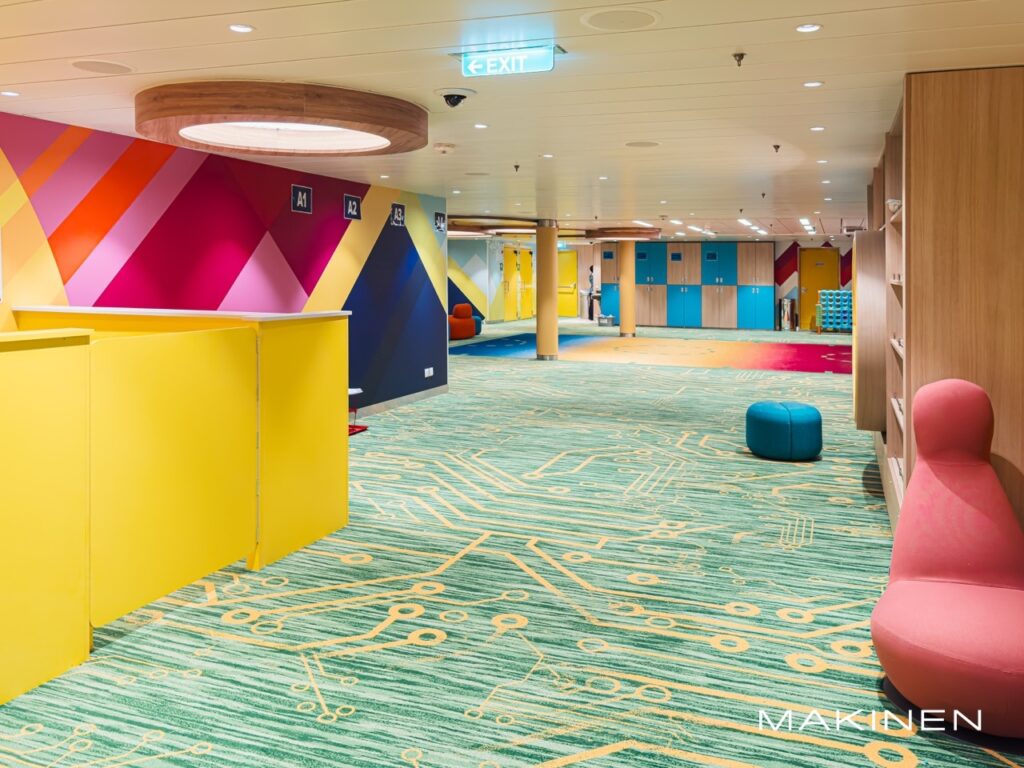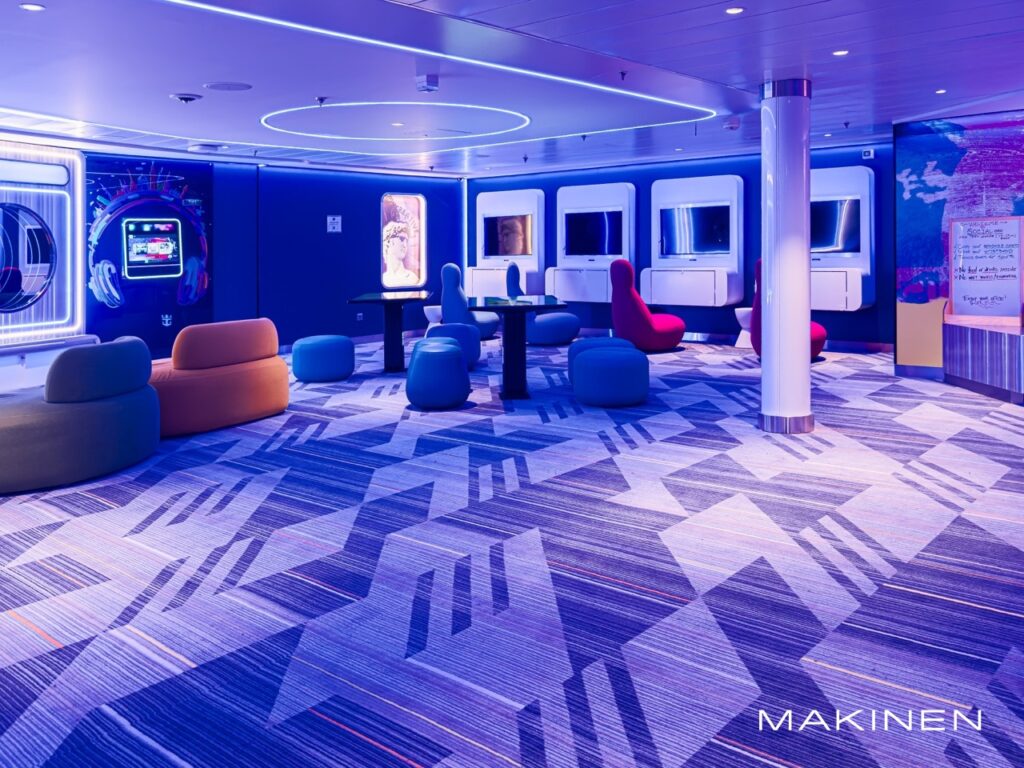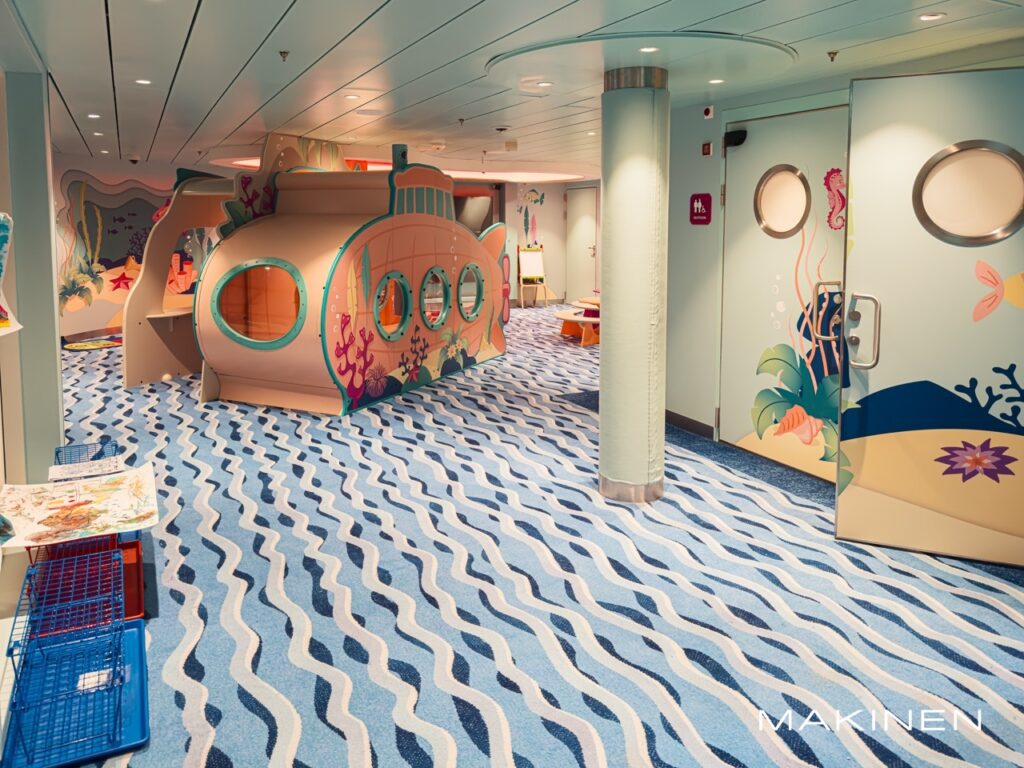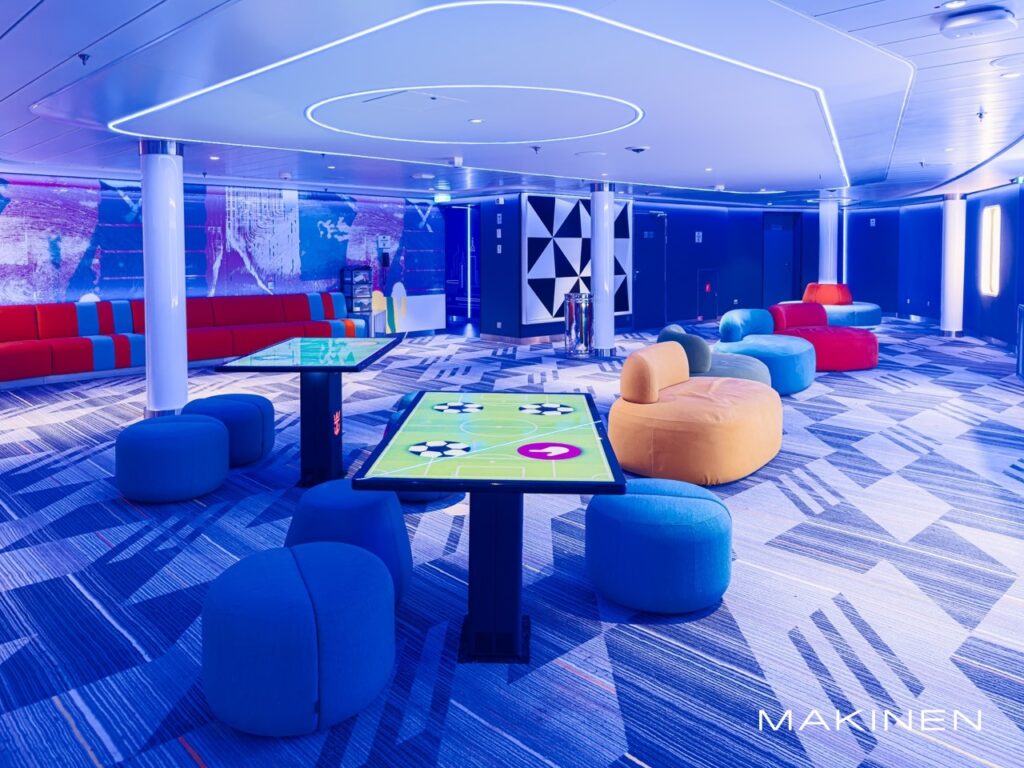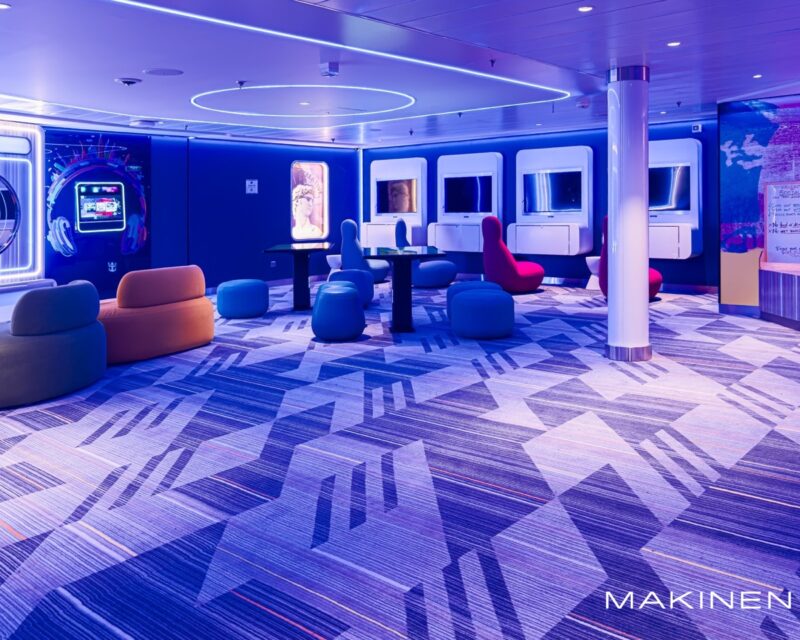
In spring 2026, MAKINEN refurbished 1,000 m² of public spaces onboard Royal Caribbean’s Liberty of the Seas, transforming the Adventure Ocean area into new spaces for children and teenagers. The work took place during the vessel’s spring dry dock, with approximately 80 MAKINEN professionals involved in the project.
The refurbishment covered the new Teens Lounge and Arcade, along with the Juniors, Hangout, Workshop, Arena and Adventure Avenue areas. MAKINEN was responsible for the turnkey interior conversion, including demolition, new walls and partitions, insulation, flooring and carpet, ceilings, wall finishes, electrical and plumbing modifications, and fixed furniture installations. Some of the fixed furniture was also produced in-house by MAKINEN.
“We initially thought this would be a fairly straightforward conversion: there was plenty of open space and no particularly complicated interior details,” says Ville Helenius, COO of MAKINEN. “But there was a surprising amount of technical details involved, and having so many contractors working in the same areas added to the complexity.”
Making it work
One of the most challenging installations was a movable partition wall in the Workshop area, which allows the room to be divided or opened up depending on its use. During installation, it became clear that the wall might not fit into the available ceiling space.
After trying different approaches, the team finally found a way to reroute and raise hundreds of existing cables above the ceiling, and reroute Hi-Fog lines, creating the space needed for the wall mechanism. It was a tight fit, with only millimeters of clearance, but the team’s solution made the installation possible.
The space also featured colorful graphics printed directly onto aluminum wall panels instead of conventional printed vinyl coverings, providing a more durable solution for an area subject to the wear and tear of children’s activities. The challenge was keeping the printed patterns aligned from one panel to the next, especially when changes to wall layouts or openings for technical installations meant adjusting the panels during installation.
Working within the ship’s steel and aluminum structures required different fastening methods and installation techniques. While the ship’s main structure is steel, parts of the upper decks are built from aluminum to reduce weight. The team had to adapt its methods when working with these different structures.
And as is often the case in refurbishments, some existing installations turned out to be different from what the drawings showed. “You can prepare for a lot of things, but you never know absolutely everything until you open up the structures,” Helenius explains. “Sometimes you find something that wasn’t in the drawings, and then you have to work together to figure out a solution. The ship’s technical team was a tremendous help in resolving these issues.”
When marine interior expertise matters
Alongside MAKINEN’s interior works, several specialist contractors were carrying out other tasks, including structural modifications and installing entertainment systems, interactive games and play equipment. Coordinating the work of so many contractors was one of the biggest challenges of the project. It also showed how important clear communication and visibility into other contractors’ plans and requirements are to keeping the work on track.
The Adventure Ocean conversion was the kind of project where having experienced marine construction professionals on site made all the difference:
“It was a tough project, and the team made an enormous effort to get everything finished to the high standards we always aim for,” Helenius says. “There were some very long days, and at times the pressure was intense. I really want to thank our people for pushing through and delivering such a beautiful result.”